
The Country Reports on Human Rights Practices are submitted annually by the U.S. Department of State to the U.S. Congress in
Secretary of State Hillary Rodham Clinton and Assistant Secretary for Democracy, Human Rights and Labor Michael Posner will release the Country Reports on Human Rights Practices for 2010 on Thursday, April 7 at approximately 10:30 a.m. in the Press Briefing Room of the U.S. Department of State.
The remarks will be open to credentialed members of the media. The Country Reports on Human Rights Practices, commonly known as the Human Rights Report, covers the legal status of human rights in more than 190 countries and territories around the world.
Media representatives may attend this event upon presentation of one of the following: (1) A U.S. Government-issued identification card (Department of State, White House, Congress, Department of Defense or Foreign Press Center), (2) a media-issued photo identification card, or (3) a letter from their employer on letterhead verifying their employment as a journalist, accompanied by an official photo identification card (driver's license, passport).
Embargoed copies of the 2010 Human Rights Report will be available online as of 9:30 a.m. EDT, April 7th at: http://paei.state.gov/g/drl/rls/hrrpt/2010/index.htm
The user id is: hrr_2011
The password is: hrr1234
The report will be embargoed until the press briefing.
Tuesday, April 05, 2011


Sunday, March 27, 2011
Geraldine Ferraro; UN Human Rights Commission Ambassador and 1984 U.S. VP Candidate Dies

Geraldine Ferraro; UN Human Rights Commission Ambassador and 1984 US VP Candidate has died.
Marymount Manhattan College holds her the Honorable Geraldine A. Ferraro papers.
Statement by President Bill Clinton and Secretary of State Hillary Rodham Clinton on the Passing of Geraldine Ferraro
"Gerry Ferraro was one of a kind -- tough, brilliant, and never afraid to speak her mind or stand up for what she believed in -- a New York icon and a true American original. She was a champion for women and children and for the idea that there should be no limits on what every American can achieve. The daughter of an Italian immigrant family, she rose to become the first woman ever nominated to the national ticket by a major political party. She paved the way for a generation of female leaders and put the first cracks in America's political glass ceiling. She believed passionately that politics and public service was about making a difference for the people she represented as a congresswoman and Ambassador.
For us, Gerry was above all a friend and companion. From the rough-and-tumble of political campaigns to the important work of international diplomacy, we were honored to have her by our side. She was a tireless voice for human rights and helped lead the American delegation to the landmark Fourth World Conference on Women in Beijing in 1995. Through it all, she was a loyal friend, trusted confidante, and valued colleague.
Our thoughts and prayers are with Gerry's husband John, her children and grandchildren, and their entire family."
Tuesday, March 22, 2011
Librarians and Human Rights 2010 Jean E. Coleman Library Outreach Lecture

Librarians and Human Rights
2010 Jean E. Coleman Library Outreach Lecture
By Kathleen de la Peña McCook, Distinguished University Professor
University of South Florida School of Information.
At the OLOS website.
Saturday, March 19, 2011
Lawyers specialising in Human Rights are being used to Fight a Case to Save the Island's Libraries.
Leigh Day and Co say they have been instructed by a number of local residents who are determined to stop the plans.
It was confirmed earlier on March 1 that the Isle of Wight Council will continue to run six of the Island's 11 libraries, but funding for the rest will stop in June, with hopes the community will take them on.
But campaigners say that what is left won't be comprehesive or efficient for all people and claim the council will be in breach of its duty in law, under section 7 of the Public Libraries and Museums Act 1964.
It is also claimed that there has been no analysis of the effect of library closures in areas of greatest deprivation, or the travel and parking costs at alternative libraries for those left without a local branch - as well as the impact on women and older and disabled people.
Richard Stein and Rosa Curling in the human rights department at Leigh Day & Co claim the IW Council's failed to properly consider the impact their decision will have on almost 20% of the current users, that this is unlawful and for this reason their clients have asked them to apply to the High Court to challenge the decision.
Read more.
Saturday, January 29, 2011
“Human Rights Meet Civil Rights”

Part recognition event, part educational opportunity, and part celebration, an upcoming art exhibition at ASU’s Fletcher Library at the West campus features the works of local artists, Phoenix South Mountain High School students, youth in detention, HUD housing residents and others.
“Human Rights Meet Civil Rights” will be featured at ASU’s Fletcher Library on the university’s West campus Jan. 22-March 18. The exhibit on the library’s second and third floors is presented by Cultural Arts Coalition, Arizona, and is free to the public.
Friday, January 28, 2011
OUT OF THE STACKS AND INTO THE COMMUNITY:THE LIBRARY’S APPROACH TO NEWCOMERS
Jan 31 - Feb 4, 2011.
Welcome to the University of Alberta International Week 2011—five full days of events to spark thought and stir discussion on current global issues.
This year’s theme—World on the Move: Unpacking Migration—examines the global challenges that cause the migration of communities, from human rights struggles and climate change, to economic uncertainty and poverty.
Events will also investigate the social, political and environmental challenges that result from the migration of communities.
=============
11:00 AM – 12:30 PM
Tory Lecture Theatre 1
OUT OF THE STACKS AND INTO THE COMMUNITY:THE LIBRARY’S APPROACH
TO NEWCOMERS
Angelica Tarnowski and Kristen Rumohr,Millwoods Branch, Edmonton Public Library; Dr. Toni Samek, School of Library and
Information Studies (SLIS) Community-led philosophy is a recent
phenomenon that has come to the Edmonton Public Library; but what is it, really? Librarians from EPL will discuss their responsibilities in ensuring that the library is a welcoming and relevant place for newcomers and members of the multicultural community, and how they look for ways to connect with newcomer
youth to meet their library needs. Dr. Toni Samek will also deliver a talk about migration and library issues in the United
States, written by Kathleen de la Pena McCook, distinguished university professor at the University of Southern Florida and
immigration rights advocate.
Friday, January 21, 2011
Human Rights Education (HRE) Library
 The Human Rights Education (HRE) Library contains over 3,000 full-text guides, curricula, textbooks and other documents that can be used for both formal and non-formal education about, for and in human rights.
Tuesday, December 28, 2010
Wikileaks and Its Relationship to ALA
Wikileaks and Its Relationship to ALA.
What is the Mission of WikiLeaks?
Here we enter controversial territory because some say that WikiLeaks’ stated mission and the outcome differ. The WikiLeaks web site bases the mission on Article 19 of the Universal Declaration of Human Rights, which asserts the human right of expression and receipt of information regardless of frontiers. Assange’s biography makes it clear that even as a teenager he was interested in making information transparent for everyone, and, some would argue, regardless of the consequences. The web site goes on to explain the concept of “principled leaking,” (web site 3.2) necessary to fight government, individual, and corporate corruption. Assange cites the actions of Daniel Ellsburg and the Pentagon Papers case as an example of why principled leaking is essential for good government. The U.S. Supreme Court’s decision in the Pentagon Papers case is online at the Cornell law site and other online sources. Commentators,including Todd Gltlin, differ on whether that parallel is accurate.
Ellsburg himself has publicly supported Wikileaks in this controversy. Ellsberg is slated to be a speaker at the ALA Annual Conference in New Orleans in June, 2010 (arranged well before the current WikiLeaks controversy).
WikiLeaks views itself as an intermediary to help whistleblowers, who can “drop” the info at WikiLeaks to protect themselves.
Human Rights Documentation Initiative (HRDI) at the University of Texas at Austin

Through service to international human rights scholars, activists, and students, the University of Texas Libraries (UTL) identified a need to preserve and make accessible the historical record of genocide and human rights violations. In order to address this need, UTL established the Human Rights Documentation Initiative (HRDI) at the University of Texas at Austin with a generous grant from the Bridgeway Foundation in 2008. Working with activists, scholars, and organizations to identify electronic and analog resources that are particularly vulnerable to loss, the HRDI aims to preserve the most fragile records of human rights struggles worldwide, promote the security and use of human rights archival materials, and further human rights research and advocacy around the world. Additionally, the Human Rights Documentation Initiative has partnered with the Bernard and Audre Rapoport Center for Human Rights and Justice to identify key strategic issues for the Initiative as well as provide relevant programming to the UT community and beyond.
The Human Rights Documentation Initiative is international in scope, with projects ranging from Kigali, Rwanda to the Burma border.
Friday, December 10, 2010
Human Rights Day 2010
Human Rights Day 2010 on 10 December recognizes the work of human rights defenders worldwide who act to end discrimination.
Acting alone or in groups within their communities, every day human rights defenders work to end discrimination by campaigning for equitable and effective laws, reporting and investigating human rights violations and supporting victims.
While some human rights defenders are internationally renowned, many remain anonymous and undertake their work often at great personal risk to themselves and their families.
Thursday, December 09, 2010
Beyond Article 19: Libraries and Social and Cultural Rights

Library Juice has posted the introduction to Beyond Article 19: Libraries and Social and Cultural Rights to their website. Julie Edwards’ introduction is a good read in itself regarding the United Nations Declaration of Human Rights, particularly Articles 19 and 27. We know about Article 19 as a fundamental support for intellectual freedom, but there is less attention in the library world given to Article 27, about cultural rights. The book explores Article 27 and cultural rights in relation to libraries.
Monday, December 06, 2010
Write-a-thon planned for Human Rights Day- Bend Public Library
Write-a-thon planned for Human Rights Day
Published: December 01. 2010 4:00AM PST
A letter-writing event in honor of Human Rights Day will take place at the Bend Public Library on Dec. 11, according to a news release.
The free event, which will run from 11 a.m. to 5 p.m., will give residents the opportunity to write letters and sign petitions supporting human rights issues and topics. Attendees can stop by the library’s Brooks Room and write letters about a variety of human rights issues. Free cookies, brownies and cocoa will be available for letter-writers.
Tuesday, November 30, 2010
Center for Human Rights Documentation and Research at Columbia University Libraries..-"Librarians for Human Rights Recognition for 2010"

The "Librarians for Human Rights Recognition for 2010" is the Center for Human Rights Documentation and Research at Columbia University Libraries.
The Center for Human Rights Documentation and Research supports the community of teachers, researchers, and law and social justice advocates working in the multidisciplinary sphere of Human Rights. The Center develops global collections -- primary and secondary resources, as well as archival collections and internal records from human rights organizations -- and enhances the visibility and accessibility of these collections through high-profile programs, collaborative projects and library services.
CHRDR is the official designated repository for the archives of major Human Rights organizations such as Amnesty International USA, the Committee of Concerned Scientists, Human Rights First, and Human Rights Watch.
Monday, November 29, 2010
Human Rights Day 2010: Human Rights Defenders Who Act to End Discrimination.

The theme for Human Rights Day 10 December 2010 is human rights defenders who act to end discrimination.
Human rights defenders acting against discrimination, often at great personal risk to both themselves and their families, are being recognized and acclaimed on this day.
Human rights defenders speak out against abuse and violations including discrimination, exclusion, oppression and violence. They advocate justice and seek to protect the victims of human rights violations. They demand accountability for perpetrators and transparency in government action. In so doing, they are often putting at risk their own safety, and that of their families.
Some human rights defenders are famous, but most are not. They are active in every part of the world, working alone and in groups, in local communities, in national politics and internationally.
Conference on Information Rights as Human Rights
Conference on Information Rights as Human Rights
The focus of this year's Information Ethics Roundtable is the relation between human rights and information ethics.
Submit an abstract of up to 500 words on any of the above or closely related topics. E-mail contributions to infoethics2011@gmail.com. Include your full name, institutional affiliation and e-mail address. Address any queries about the conference to Kay Mathiesen (kmathies@email.arizona.edu).
Submission Deadline: December 15, 2010.
Acceptance Notification: January 1, 2011
Sunday, November 28, 2010
Human Rights Quarterly-November 2010

November, 2010.
of special note:
"International Forensic Investigations and the Human Rights of the Dead." by Adam Rosenblatt.
"The Interplay Between Global and Regional Human Rights Systems in the Construction of the Indigenous Rights Regime." by Mauro Barelli.
Friday, November 26, 2010
Southern Exposure Human Rights and HIV in the Southern United States
The South is at the epicenter of the HIV epidemic in the United States, with more people living with HIV and dying of AIDS than in any region in the country. The South has:
* the highest rates of new infections,
* the most AIDS deaths,
* the largest numbers of adults and adolescents living with HIV/AIDS.
Report at Human Rights Watch.
* the highest rates of new infections,
* the most AIDS deaths,
* the largest numbers of adults and adolescents living with HIV/AIDS.
Report at Human Rights Watch.
Thursday, November 25, 2010
Lessons to Be Learned From Paulo Freire as Education Is Being Taken Over by the Mega Rich
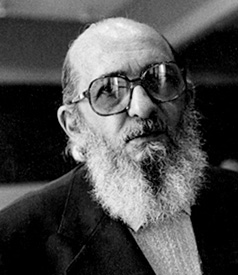
At a time when institutions of public and higher education have become associated with market competition, conformity, disempowerment and uncompromising modes of punishment, making known the significant contributions and legacy of Paulo work is now more important than ever before.
Lessons to Be Learned From Paulo Freire as Education Is Being Taken Over by the Mega Rich
Tuesday 23 November 2010
by: Henry A. Giroux,
t r u t h o u t | Op-E
Wednesday, November 24, 2010
International Migrants Day - December 18
International Migrants Day - December 18.
International Convention on the Protection of the Rights of All Migrant Workers and Members of Their Families
Adopted by General Assembly resolution 45/158 of 18 December 1990
International Convention on the Protection of the Rights of All Migrant Workers and Members of Their Families
Adopted by General Assembly resolution 45/158 of 18 December 1990
Saturday, November 20, 2010
Syndromes of Corruption: Wealth, Power, and Democracy
International Anti-Corruption Day is 9 December. The UN General Assembly designated 9 December as International Anti-Corruption Day. This decision was taken in order to raise awareness of corruption and of the role of the United Nations Convention against Corruption in combating and preventing it.

Syndromes of Corruption: Wealth, Power, and Democracy
By Johnston, Michael.
Corruption is a threat to democracy and economic development in many societies. It arises in the ways people pursue, use and exchange wealth and power, and in the strength or weakness of the state, political and social institutions that sustain and restrain those processes. Differences in these factors, Michael Johnston argues, give rise to four major syndromes of corruption: Influence Markets, Elite Cartels, Oligarchs and Clans, and Official Moguls. Johnston uses statistical measures to identify societies in each group, and case studies to show that the expected syndromes do arise. Winner of the 2009 University of Louisville Grawemeyer Award for Ideas Improving World Order.Michael Johnston is Charles A. Dana Professor of Political Science at Colgate University.
Subscribe to:
Posts (Atom)

 Posts

